
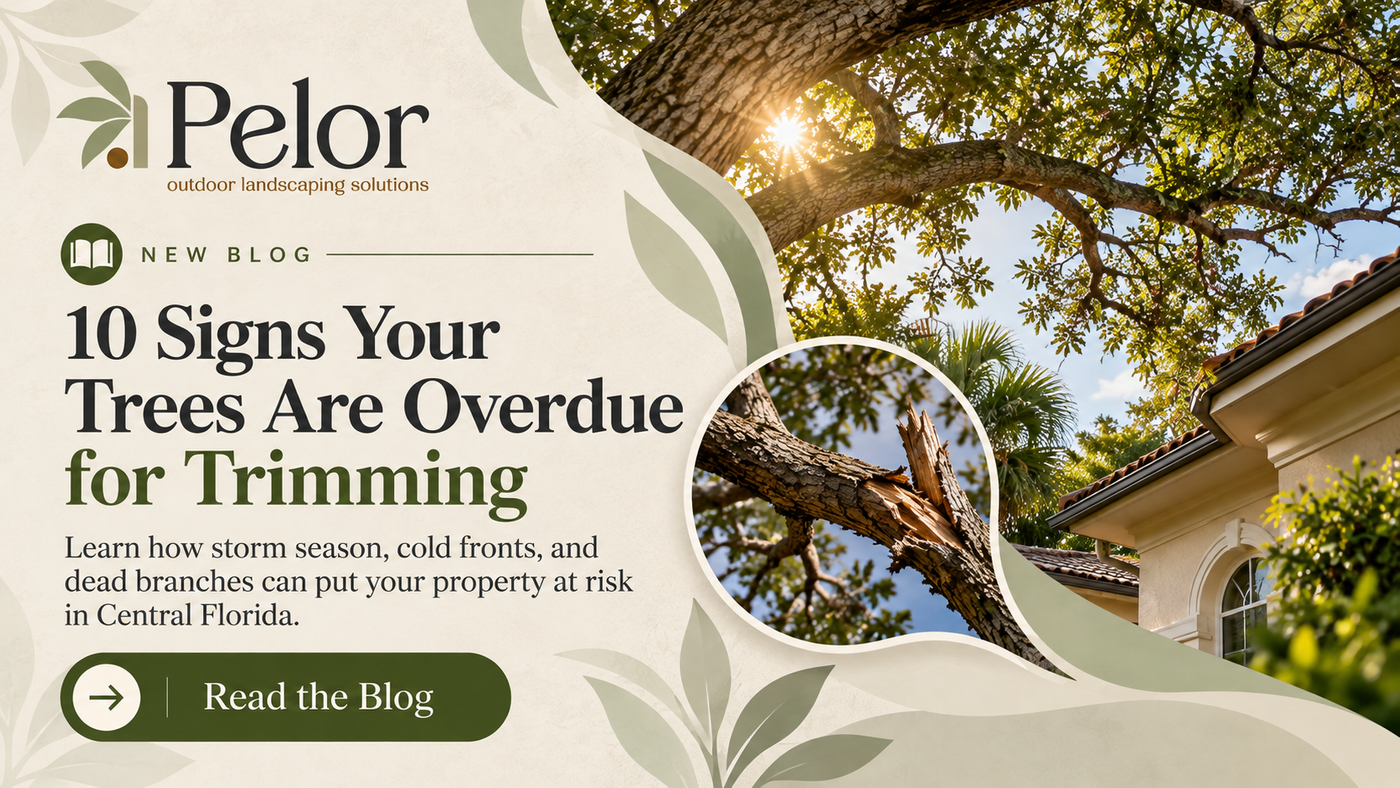
Storm season, cold fronts, and hidden tree damage can put your property at risk. Here's what to look for before a small problem becomes an expensive one.
Trees are an essential part of a beautiful Florida landscape. They provide shade, enhance curb appeal, and contribute to the overall value of residential and commercial properties.
But without proper maintenance, those same trees can become a serious liability.
In Central Florida, trees face unique environmental challenges throughout the year. From powerful thunderstorms and hurricane-season winds to unexpected winter cold fronts, changing weather conditions can weaken branches and expose existing structural problems.
For property owners in Kissimmee, Orlando, St. Cloud, and surrounding communities, knowing when your trees need professional attention is an important part of protecting your landscape.
Here are 10 warning signs that your trees may be overdue for trimming, along with why addressing them before severe weather arrives can make a significant difference.
1. Dead or Dried-Out Branches Are Still Hanging in the Canopy
One of the most noticeable signs that your tree needs attention is the presence of dead, brittle, or dried-out branches.
Dead branches can remain attached for months, even when they are no longer structurally sound. During strong winds, these weakened limbs may break and fall without warning.
Why this matters in Central Florida:
Winter cold snaps can damage sensitive tree species, causing leaves and smaller branches to turn brown or dry out. In some cases, damaged limbs may deteriorate over time, creating potential hazards during future storms.
Not every brown branch is dead, however. Some cold-damaged trees need time to reveal which portions will recover.
What to look for:
Branches with no visible healthy growth
Brittle limbs that snap easily
Sections of the canopy that remain bare
Deadwood hanging above walkways, roofs, or parking areas
A professional tree assessment can help determine which branches require removal and which may recover naturally.
2. Branches Are Hanging Over Your Roof or Building
Tree branches extending over rooftops, garages, screened patios, and commercial structures deserve close attention.
Even healthy branches can become problematic when they grow too close to buildings.
During severe thunderstorms or tropical storms, excessive branch movement may cause contact damage to roofing materials, gutters, and exterior structures.
Overhanging limbs can also drop debris that accumulates in gutters and drainage systems.
Property protection tip: Have a qualified tree professional evaluate branches growing close to structures before hurricane season. Proper pruning can reduce certain risks without unnecessarily removing healthy canopy.
3. Your Tree Canopy Looks Overgrown or Unbalanced
A dense canopy is not automatically unhealthy, but excessive growth, poor branch structure, or uneven weight distribution can indicate that pruning is needed.
When branches compete for space or develop weak connections, the tree may become more vulnerable to structural failure.
In Central Florida, where rapid growing conditions encourage vigorous vegetation, regular inspections are particularly valuable.
Signs include:
Branches rubbing or crossing
Excessively long limbs with heavy growth near their ends
An uneven canopy caused by damaged or poorly attached branches
Dense clusters of weak interior growth
Important: Removing too much foliage can actually increase tree stress. Professional pruning should prioritize structural health rather than simply thinning the canopy as much as possible.
4. Your Trees Haven't Been Inspected Before Storm Season
Florida's Atlantic hurricane season officially runs from June 1 through November 30.
Although major hurricanes do not affect every community each year, Central Florida regularly experiences intense thunderstorms, heavy rainfall, and strong wind events.
Waiting until a storm is approaching can limit your options for safely addressing hazardous branches.
Tree maintenance should be part of your property's annual storm preparation strategy.
A pre-storm inspection can help identify:
Dead or damaged limbs
Weak branch attachments
Cracked or compromised sections
Branches threatening buildings or common areas
Signs of root or trunk instability
For HOA communities and commercial properties, scheduling inspections well before peak storm activity can also make maintenance planning easier.
5. Branches Were Damaged by a recent storm
Florida may be known for its warm climate, but Central Florida is not immune to sudden temperature drops.
Strong winter cold fronts can bring freezing or near-freezing temperatures, particularly in exposed areas.
Some tropical and subtropical trees are especially sensitive to cold damage.
After a cold snap, property owners may notice:
Brown or blackened foliage
Wilted leaves
Dried branch tips
Sections of the canopy that stop producing healthy growth
Bark splitting or other visible damage
Why cold damage matters for storm preparation:
Branches that die following freezing conditions can remain in the canopy long after temperatures rise. If left unaddressed, deadwood may eventually break during thunderstorms or high winds, potentially damaging vehicles, fences, roofs, and surrounding landscaping.
However, pruning immediately after a freeze is not always recommended. Some trees need time for the full extent of cold damage to become visible.
A qualified professional can help determine when pruning is appropriate.
6. Branches Are Growing Too Close to Power Lines
Trees growing near electrical infrastructure require special attention.
As branches expand, they can interfere with overhead utility lines and create potential electrical hazards.
Strong winds may push branches into nearby lines, while falling limbs can contribute to outages or equipment damage.
Safety reminder: Never attempt to trim branches near energized power lines yourself. Contact your utility provider or an appropriately qualified line-clearance tree professional.
For commercial properties and HOA communities, utility clearance should be considered during routine landscape inspections.
7. You Notice Cracked, Split, or Weak Branch Connections
Not all dangerous tree conditions are immediately obvious.
A tree may appear healthy from a distance while containing structural weaknesses that become more serious during storms.
Pay attention to:
Visible cracks in large limbs
Split branch unions
Hanging or partially broken branches
Branches with included bark or narrow, weak attachments
Sudden changes in the position of major limbs
These conditions can indicate an increased risk of branch failure.
If you notice a large cracked limb above a frequently used area, restrict access underneath it and arrange a professional assessment promptly.
8. Your Trees Are Blocking Walkways, Driveways, or Visibility
Overgrown trees can create everyday problems beyond storm damage.
Low-hanging branches may obstruct sidewalks, interfere with vehicles, reduce visibility near intersections, or make common areas difficult to navigate.
For HOA and commercial property managers, these conditions may create safety concerns and maintenance issues.
Regular pruning helps maintain appropriate clearance around:
Sidewalks and pedestrian areas
Parking lots and driveways
Community entrances
Roadways and signage
Building access points
Maintaining clear, accessible outdoor spaces contributes to a safer and more professional-looking property.
9. Broken Branches Are Still Hanging After a Storm
After a thunderstorm or tropical system passes, it's easy to focus on debris already on the ground.
However, some of the most concerning damage may still be above you.
Broken branches can become lodged in the canopy, creating what tree professionals often call hangers.
These branches may fall later, even during relatively calm conditions.
Post-storm warning signs include:
Limbs hanging at unusual angles
Fresh cracks or exposed wood
Branches caught in neighboring limbs
New canopy gaps or significant limb loss
Changes in trunk lean or visible root movement
Never walk or park beneath visibly damaged limbs.
If a tree has experienced significant storm damage, have it evaluated before attempting cleanup or additional pruning.
10. You Can't Remember the Last Time Your Trees Were Professionally Evaluated
One of the most overlooked warning signs is simply a lack of routine tree inspections.
Trees grow and change over time. Branches become heavier, structural conditions develop, and weather events can create damage that isn't immediately visible.
While not every tree needs trimming every year, periodic professional evaluations can help identify maintenance needs before they become urgent.
For large residential landscapes, HOA communities, and commercial properties, proactive tree care supports better long-term planning.
Instead of waiting for a fallen branch or property damage, consider incorporating tree assessments into your regular landscape maintenance program.
Why Storm Season and Winter Cold Fronts Make Tree Maintenance Important
Central Florida property owners face two distinct seasonal challenges that can affect tree health.
Hurricane Season: June Through November
Strong winds, saturated soils, and heavy rainfall can increase the risk of falling branches and tree failure.
Trees with existing structural defects, dead limbs, or compromised root systems may be particularly vulnerable.
Proper structural pruning, when appropriate, can help reduce certain risks. However, no amount of trimming can make a tree completely storm-proof.
Winter Cold Fronts: Typically December Through February
Freezing temperatures can injure sensitive trees and landscaping.
Cold-damaged branches may not die immediately. Some deterioration becomes more apparent as warmer weather returns.
If damaged wood remains in the canopy, it may pose a future risk during spring thunderstorms and the following hurricane season.
The key takeaway: Tree maintenance shouldn't be treated as a hurricane-season-only task. A year-round inspection strategy can help property owners identify storm damage, cold injury, and structural concerns before conditions worsen.
Should You Trim Your Trees Yourself?
Small, accessible branches may sometimes be manageable with basic hand tools, but large trees, elevated limbs, and storm-damaged branches present significant safety risks.
Improper pruning can also create long-term problems.
Removing excessive foliage, cutting large limbs incorrectly, or topping trees can weaken tree structure and encourage poorly attached regrowth.
For mature trees or potentially hazardous conditions, consider hiring a qualified tree-care professional who follows recognized pruning standards.
Protect Your Central Florida Property Before the Next Storm
Whether you manage a residential property, HOA community, or commercial landscape, identifying tree maintenance concerns early can help reduce avoidable risks.
From dead branches caused by winter cold snaps to overgrown limbs exposed to hurricane-season winds, proactive landscape care helps protect buildings, outdoor spaces, and the people who use them.
At Pelor Outdoor, we understand the seasonal challenges facing landscapes throughout Kissimmee and Central Florida.
Our focus is helping property owners and managers maintain attractive, functional, and well-cared-for outdoor environments throughout the year.
Don't wait until a damaged branch becomes a costly problem.
Contact Pelor Outdoor to discuss your property's landscape maintenance needs and appropriate tree-care options before the next major weather event.
Serving Kissimmee and the greater Central Florida area.
Frequently Asked Questions About Tree Trimming in Central Florida
How do I know if my tree needs trimming?
Common signs include dead branches, cracked limbs, weak branch attachments, overhanging growth, and branches obstructing walkways or buildings. A qualified professional can determine whether pruning or another type of tree care is needed.
Can cold weather kill tree branches in Florida?
Yes. Freezing temperatures can damage or kill branches on cold-sensitive trees. Some damage becomes apparent immediately, while other symptoms may take weeks or longer to develop.
Can dead branches from a winter freeze cause damage during hurricane season?
Yes. Dead branches left in a tree canopy can break during strong winds, potentially damaging roofs, vehicles, fences, and surrounding property. The level of risk depends on the branch's size, location, and condition.
When is the best time to trim trees in Central Florida?
Timing depends on tree species, health, and pruning objectives. Hazardous dead or broken branches may require prompt attention, while routine pruning and cold-damage correction may be better scheduled at specific times of year.
Should I trim my trees before hurricane season?
A professional inspection before hurricane season is a good preventive measure. Appropriate structural pruning can address certain defects, but excessive or improper trimming may weaken trees rather than protect them.
Do HOA communities need regular tree inspections?
Regular tree evaluations can help HOA managers identify hazardous conditions, maintain clearance around shared spaces, and plan landscape maintenance budgets. Inspection frequency should reflect the property's tree inventory, site conditions, and risk exposure.