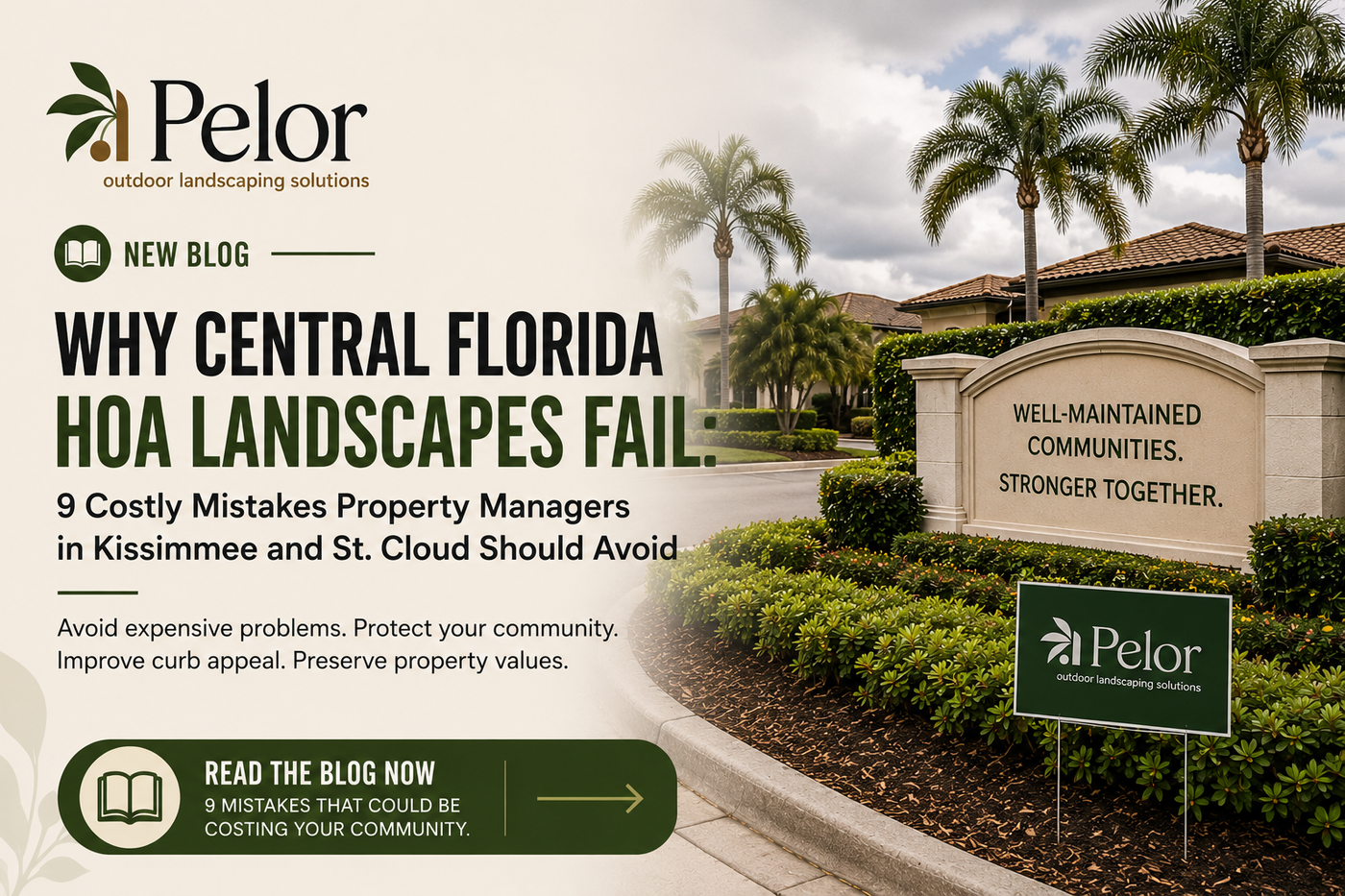
A well-maintained landscape does more than make an HOA community look attractive. It protects property values, supports resident satisfaction, reduces complaints, and helps create a consistent appearance throughout the neighborhood.
However, landscaping in Central Florida requires more than routine mowing.
Communities in Kissimmee, St. Cloud, and the surrounding areas must manage extreme heat, rapid plant growth, heavy summer rain, irrigation restrictions, tropical weather, sandy soils, and occasional winter freezes. When landscape maintenance is handled reactively instead of strategically, small issues can quickly become expensive problems.
Key Takeaways
- The lowest landscaping bid may create higher repair and replacement costs later.
- Irrigation inspections are essential for healthy turf and controlled water use.
- HOA maintenance plans should change with Central Florida’s seasons.
- Proactive inspections can reduce complaints and emergency expenses.
- Community entrances and common areas deserve additional attention.
- Tree evaluations should be completed before hurricane threats develop.
- Failed plants should not be replaced until the cause is identified.
- A detailed scope of work improves contractor accountability.
- Long-term landscape planning supports better HOA budgeting.
Here are nine common HOA landscaping mistakes and how community managers can avoid them.
1. Choosing a Landscaping Company Based Only on Price
The lowest proposal is not always the lowest-cost solution.
A contractor may offer a competitive rate by reducing labor hours, limiting property inspections, skipping detailed trimming, or excluding irrigation monitoring. Those gaps may not be obvious during the first few weeks of service, but they often become visible over time.
Common results include:
- Overgrown shrubs
- Declining turf
- Missed weeds
- Inconsistent edging
- Irrigation leaks
- Repeated resident complaints
HOA boards should compare the complete scope of work, not just the monthly price. Proposals should clearly define visit frequency, trimming schedules, irrigation responsibilities, storm cleanup procedures, reporting, and communication expectations.
2. Treating Irrigation as a Separate Issue
Irrigation performance affects nearly every part of an HOA landscape.
Broken sprinkler heads, clogged nozzles, incorrect run times, poor coverage, and hidden leaks can cause dry turf in one area and oversaturation in another. A mowing crew cannot correct landscape decline if the irrigation system is not delivering water properly.
Central Florida communities should schedule routine irrigation inspections that evaluate:
- Sprinkler head alignment
- Water coverage
- Broken or leaking components
- Controller programming
- Seasonal run times
- Overspray onto sidewalks and roads
- Areas receiving too much or too little water
An irrigation audit can often identify problems before they lead to turf replacement, plant loss, higher utility bills, or visible property deterioration.
3. Using the Same Maintenance Plan Year-Round
Central Florida landscapes change significantly throughout the year.
During the summer, turf and shrubs may grow rapidly because of heat and frequent rainfall. During cooler months, growth slows and freeze-sensitive plants may require additional attention. Hurricane season also creates different maintenance priorities than the dry season.
An effective HOA landscape plan should adjust throughout the year.
Spring priorities
- Lawn recovery
- Irrigation preparation
- Mulch installation
- Plant replacement
- Fertilization planning
Summer priorities
- Heat-stress monitoring
- Irrigation efficiency
- Rapid-growth management
- Storm preparation
- Drainage inspections
Fall priorities
- Property cleanup
- Tree and shrub evaluation
- Landscape upgrades
- Budget planning
- Long-term turf health
Winter priorities
- Freeze protection
- Frost-damage evaluation
- Dormant-season maintenance
- Irrigation adjustments
- Planning for spring improvements
A static maintenance schedule can leave an HOA unprepared for changing conditions.
4. Waiting Until Residents Complain
Resident complaints should not be the primary inspection system for a community.
By the time a homeowner reports a brown area, broken sprinkler, leaning tree limb, or overgrown entrance, the problem may have existed for several weeks.
Proactive landscape inspections allow property managers to identify concerns before they become highly visible. Reports should document:
- Turf decline
- Irrigation problems
- Plant health
- Tree risks
- Drainage concerns
- Weed pressure
- Damaged landscape areas
- Recommended corrective actions
Photo documentation is particularly valuable for HOA boards because it creates a clear record of property conditions and completed work.
5. Ignoring High-Visibility Areas
Not every part of an HOA property carries the same visual impact.
Community entrances, monument signs, clubhouses, pools, playgrounds, mail centers, and major intersections often shape a visitor’s first impression. If these areas look neglected, residents may assume the entire property is being poorly maintained.
High-visibility zones should receive additional inspection and detailing. This may include:
- More frequent weed checks
- Defined bed edges
- Consistent shrub shaping
- Clean monument signs
- Fresh mulch
- Healthy seasonal color
- Proper irrigation coverage
Strategic attention to these areas can improve the appearance of the entire community without requiring a complete landscape redesign.
6. Delaying Tree Trimming Until Storm Season
Tree maintenance should not begin when a hurricane is already approaching.
Dead limbs, weak branches, excessive canopy weight, and trees growing near structures can create avoidable risks during severe weather. Last-minute tree work may also be difficult to schedule when demand increases across Central Florida.
HOA managers should arrange routine tree inspections before peak storm activity. The goal is not excessive trimming. It is to identify potential hazards, improve clearance, and reduce preventable damage.
Priority areas include trees near:
- Clubhouses
- Sidewalks
- Parking areas
- Entry roads
- Community signs
- Rooflines
- Playgrounds
- Utility infrastructure
Tree safety should be part of the community’s annual property-protection plan.
7. Replacing Plants Without Addressing the Cause of Failure
Repeatedly replacing dead plants can become expensive.
Before installing new landscaping, the maintenance provider should determine why the previous plants declined. Potential causes include:
- Too much shade
- Excessive sunlight
- Poor drainage
- Insufficient irrigation
- Root competition
- Improper plant selection
- Pest activity
- Freeze exposure
- Incorrect soil conditions
Plant selection should reflect the actual conditions of the site. Choosing Florida-friendly, appropriately sized plants can reduce replacement costs, pruning requirements, and long-term water use.
8. Allowing the Scope of Work to Become Unclear
Many contractor disputes begin with vague expectations.
One party may assume that irrigation repairs, palm trimming, mulch installation, storm cleanup, or plant replacement are included. The other may consider those items additional services.
A strong HOA landscaping agreement should specify:
- Service frequency
- Mowing expectations
- Edging and blowing
- Shrub trimming schedules
- Weed-control responsibilities
- Irrigation inspection frequency
- Reporting requirements
- Storm preparation
- Storm debris procedures
- Tree and palm responsibilities
- Additional service pricing
Clear scopes reduce confusion and make contractor performance easier to evaluate.
9. Managing Landscaping Without a Long-Term Plan
Reactive maintenance often costs more than planned maintenance.
Communities may postpone plant replacements, irrigation upgrades, drainage corrections, or tree work until conditions become urgent. This can create sudden expenses and make annual budgeting more difficult.
A long-term landscape plan can help HOA boards prioritize improvements over several budget cycles.
The plan may include:
- Irrigation repairs and modernization
- Turf replacement
- Plant-bed redesign
- Tree maintenance
- Mulch schedules
- Entrance enhancements
- Drainage improvements
- Low-maintenance plant conversions
- Storm-risk reduction
This allows boards to separate immediate needs from long-term upgrades while avoiding unexpected project costs.
What Should an HOA Expect From a Landscaping Partner?
A professional HOA landscaping provider should do more than complete scheduled tasks. The contractor should help the community identify risks, control costs, and plan future improvements.
Look for a company that provides:
- Consistent site supervision
- Clear communication
- Photo-based reporting
- Irrigation monitoring
- Seasonal recommendations
- Defined service schedules
- Proactive property inspections
- Storm-preparation support
- Detailed proposals
- Solutions tailored to Central Florida conditions
The right partner should understand both landscape maintenance and the expectations of HOA boards, property managers, and residents.
Is Your HOA Landscape Being Managed Proactively?
Pelor Outdoor helps HOA communities and commercial properties in Kissimmee, St. Cloud, and across Central Florida identify irrigation problems, maintenance gaps, storm risks, and opportunities to improve curb appeal.
Schedule an HOA landscape evaluation to receive a professional review of your community’s turf, plant beds, irrigation coverage, high-visibility areas, and maintenance priorities.