
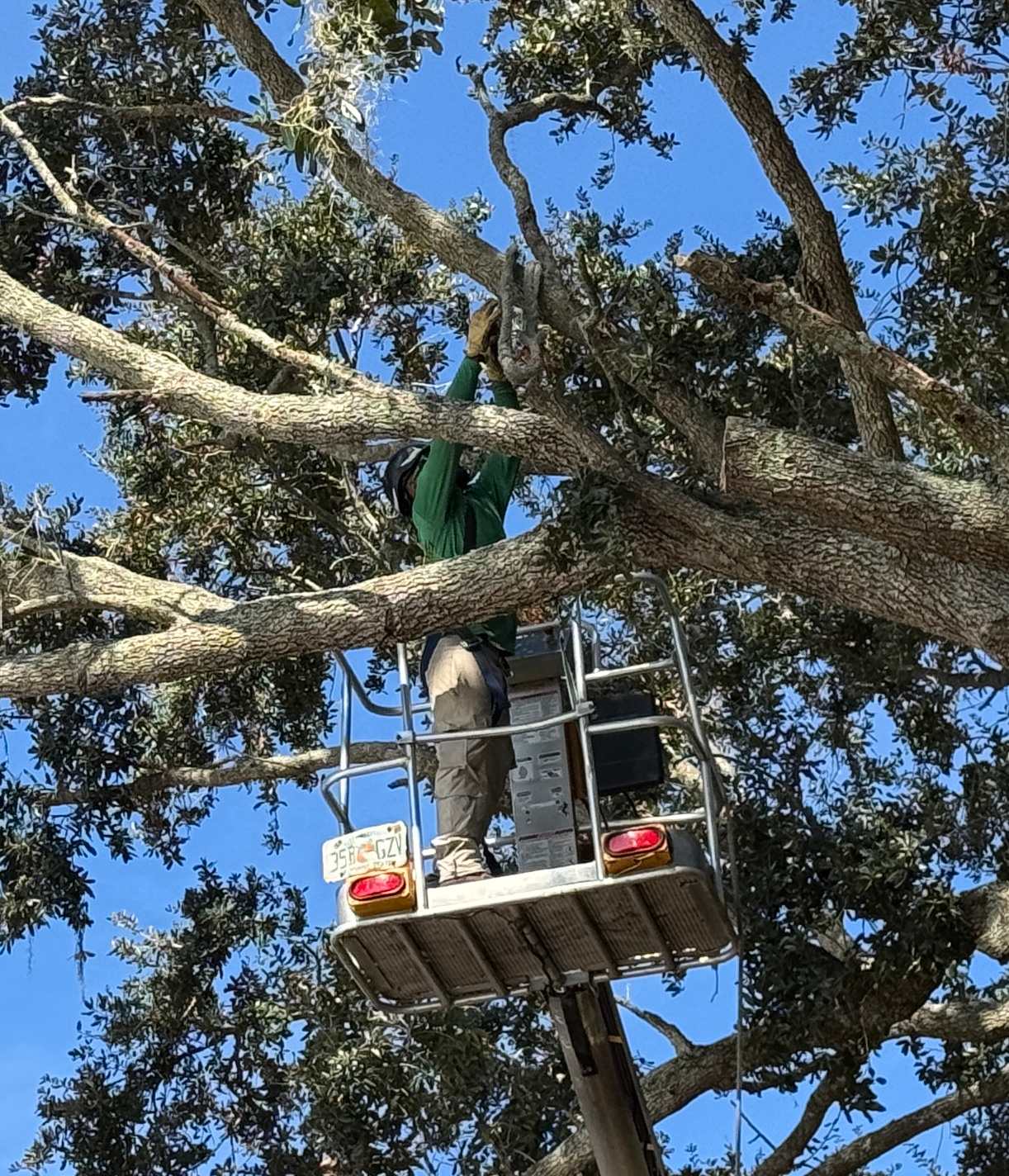
Learn which branches should be trimmed before Florida storm season and which cuts can weaken your trees. Protect your property with smart tree trimming tips from Pelor Outdoor.
Key Highlights
- Storm season in Central Florida increases the risk of falling limbs, uprooted trees, and property damage.
- Strategic tree trimming helps reduce wind resistance and improves structural stability.
- Dead, cracked, hanging, and overextended branches should be removed before hurricane season.
- Over-pruning and tree topping can weaken trees and increase storm vulnerability.
- Proper canopy thinning improves airflow without damaging tree health.
- Palm trees should not be excessively trimmed before storms.
- Preventative tree care reduces emergency repair costs and long-term landscape damage.
- Early inspections allow safer and more affordable maintenance before peak storm activity.
Storm season in Central Florida can turn a healthy-looking tree into a serious hazard overnight. Heavy rain, high winds, and saturated soil put enormous stress on trees, especially those with weak limbs, poor structure, or years of neglected growth.
Strategic tree trimming before hurricane and storm season is one of the most effective ways homeowners can reduce property damage risk while improving long-term tree health. But not every branch should be removed. Improper pruning can actually make trees more vulnerable during severe weather.
Understanding what should be cut and what should stay is critical for protecting your home, your landscape, and the health of your trees.
Why Pre-Storm Tree Trimming Matters in Florida
Florida trees face unique environmental pressures. Between tropical storms, summer thunderstorms, high humidity, and rapid seasonal growth, trees in Central Florida often develop dense canopies and structurally weak branching patterns.
Without routine maintenance, trees become more susceptible to:
- Broken limbs during wind events
- Uprooting from saturated soil
- Roof and vehicle damage
- Power line interference
- Falling debris hazards
- Disease spread through damaged branches
Preventative trimming reduces wind resistance, removes compromised limbs, and improves structural balance before severe weather arrives.
What Should Be Cut Before Storm Season
Not every tree requires aggressive pruning. The goal is selective structural improvement, not excessive canopy removal.
1. Dead or Dying Branches
Dead limbs are among the highest-risk hazards during storms. These branches are brittle, unstable, and prone to breaking even during moderate winds.
Signs of dead branches include:
- Missing bark
- Hollow wood
- No leaf growth during active season
- Visible decay or fungus
- Cracking or splitting
Removing dead wood early helps prevent unpredictable breakage during storms.
2. Weak or Cracked Limbs
Branches with visible structural weakness should be addressed before severe weather intensifies existing damage.
Problem areas include:
- Deep cracks
- Splitting branch unions
- Hanging limbs
- Storm-damaged branches from previous seasons
- Limbs with excessive end weight
These branches often fail first under wind pressure.
3. Crossing or Rubbing Branches
When branches rub against each other, they create wounds that weaken the tree and allow pests or disease to enter.
Selective thinning improves airflow while reducing structural stress points.
4. Low-Hanging Hazard Branches
Branches hanging over:
- Rooflines
- Driveways
- Walkways
- Pools
- Screen enclosures
- Outdoor living spaces
Should be evaluated before storm season begins.
Even healthy limbs can become dangerous when high winds create leverage against structures.
5. Overly Dense Interior Growth
One of the biggest misconceptions about storm preparation is that trees should be heavily topped or stripped. In reality, strategic interior thinning is far more effective.
Reducing excess interior density allows wind to move more freely through the canopy, lowering the chance of large-scale branch failure.
Professional arborists often focus on:
- Improving canopy balance
- Reducing wind sail effect
- Encouraging stronger branch spacing
- Maintaining natural tree shape
What Should NOT Be Cut Before Storm Season
Over-pruning can weaken trees and increase storm vulnerability.
1. Avoid Tree Topping
Tree topping involves cutting large sections of the canopy back to stubs or uniform heights.
This practice:
- Weakens structural integrity
- Encourages weak regrowth
- Increases decay risk
- Creates unstable future branches
- Reduces tree health dramatically
Topped trees often become more dangerous in future storms.
2. Avoid Removing Too Much Canopy
Removing excessive foliage reduces a tree’s ability to produce energy and can destabilize branch weight distribution.
A common guideline is to avoid removing more than 20% to 25% of a mature tree’s canopy during a single pruning cycle.
Over-thinning may also expose limbs to sunscald and stress.
3. Don’t Cut Healthy Structural Branches Without Reason
Large healthy limbs are often critical to overall tree stability.
Removing major structural branches unnecessarily can:
- Shift canopy balance
- Create large wounds
- Increase decay exposure
- Cause uneven stress distribution
Every major cut should have a clear structural or safety purpose.
4. Avoid DIY High-Risk Tree Work
Storm prep trimming often involves:
- Tall trees
- Heavy limbs
- Power lines
- Roof proximity
- Chainsaw operation
Improper cuts can permanently damage the tree or create severe safety risks.
Professional evaluation is especially important for mature oaks, large palms, pine trees, and trees near structures.
Best Trees to Evaluate Before Florida Storm Season
Certain species in Central Florida deserve extra attention before hurricane season.
Laurel Oaks
Laurel oaks grow quickly but often develop weak wood and internal decay over time. Older laurel oaks are commonly associated with storm failures.
Live Oaks
Live oaks are generally storm-resistant when properly maintained, but dense canopies and unbalanced growth still require periodic structural pruning.
Pine Trees
Pines can suffer from top breakage or uprooting during major storms, especially when root systems are compromised.
Palm Trees
Palms should not be over-pruned. Excessive hurricane cutting weakens palms and removes healthy fronds that help protect the tree.
Fast-Growing Ornamentals
Trees with rapid growth habits often develop weaker branch attachments and may require more frequent inspection.
When Should Tree Trimming Be Done?
In Central Florida, late winter through early spring is often an ideal time for preventative trimming before peak storm season begins.
However, dangerous limbs should be addressed immediately regardless of season.
Scheduling inspections before summer storms arrive allows:
- Safer working conditions
- Better tree recovery
- Reduced emergency service demand
- More proactive planning
Waiting until storms are already approaching often limits contractor availability and increases emergency costs.
Signs Your Tree May Need Professional Evaluation
Homeowners should schedule a professional assessment if they notice:
- Leaning trees
- Cracked trunks
- Mushrooms near roots
- Large dead limbs
- Sudden canopy thinning
- Soil lifting near the base
- Cavities or hollow areas
- Branches touching structures
Early intervention is significantly less expensive than storm-related property damage.
The Long-Term Value of Preventative Tree Care
Routine tree maintenance is not just about storm prep. It also improves:
- Tree lifespan
- Property appearance
- Safety
- Shade quality
- Property value
- Disease prevention
Well-maintained trees are more structurally resilient and better equipped to handle Florida’s extreme weather conditions.
Professional Tree Trimming in Central Florida
At Pelor Outdoor, we help homeowners throughout Central Florida prepare their landscapes for storm season with strategic tree trimming and property evaluations.
Our approach focuses on:
- Structural safety
- Tree health preservation
- Proper pruning practices
- Storm risk reduction
- Long-term landscape protection
Whether you need preventative maintenance or evaluation of high-risk trees, proper trimming before storm season can help reduce damage and protect your property.
FAQ: Tree Trimming Before Storm Season
Should trees be trimmed before hurricane season? Yes. Preventative trimming helps remove hazardous limbs, improve canopy structure, and reduce wind resistance before major storms arrive.
Can trimming too much make a tree weaker? Yes. Over-pruning can stress trees, encourage weak regrowth, and increase storm vulnerability.
What is the biggest mistake homeowners make when trimming trees? Tree topping is one of the most harmful practices because it weakens structure and promotes unstable regrowth.
Are palms supposed to be heavily trimmed before storms? No. Removing too many healthy palm fronds can weaken the tree and reduce natural storm resilience.
How often should trees be professionally inspected? Most mature trees benefit from evaluation every one to three years, especially before hurricane season.
Schedule a professional tree evaluation before storm season arrives. Pelor Outdoor helps Central Florida homeowners reduce landscape hazards with strategic tree trimming and preventative maintenance.