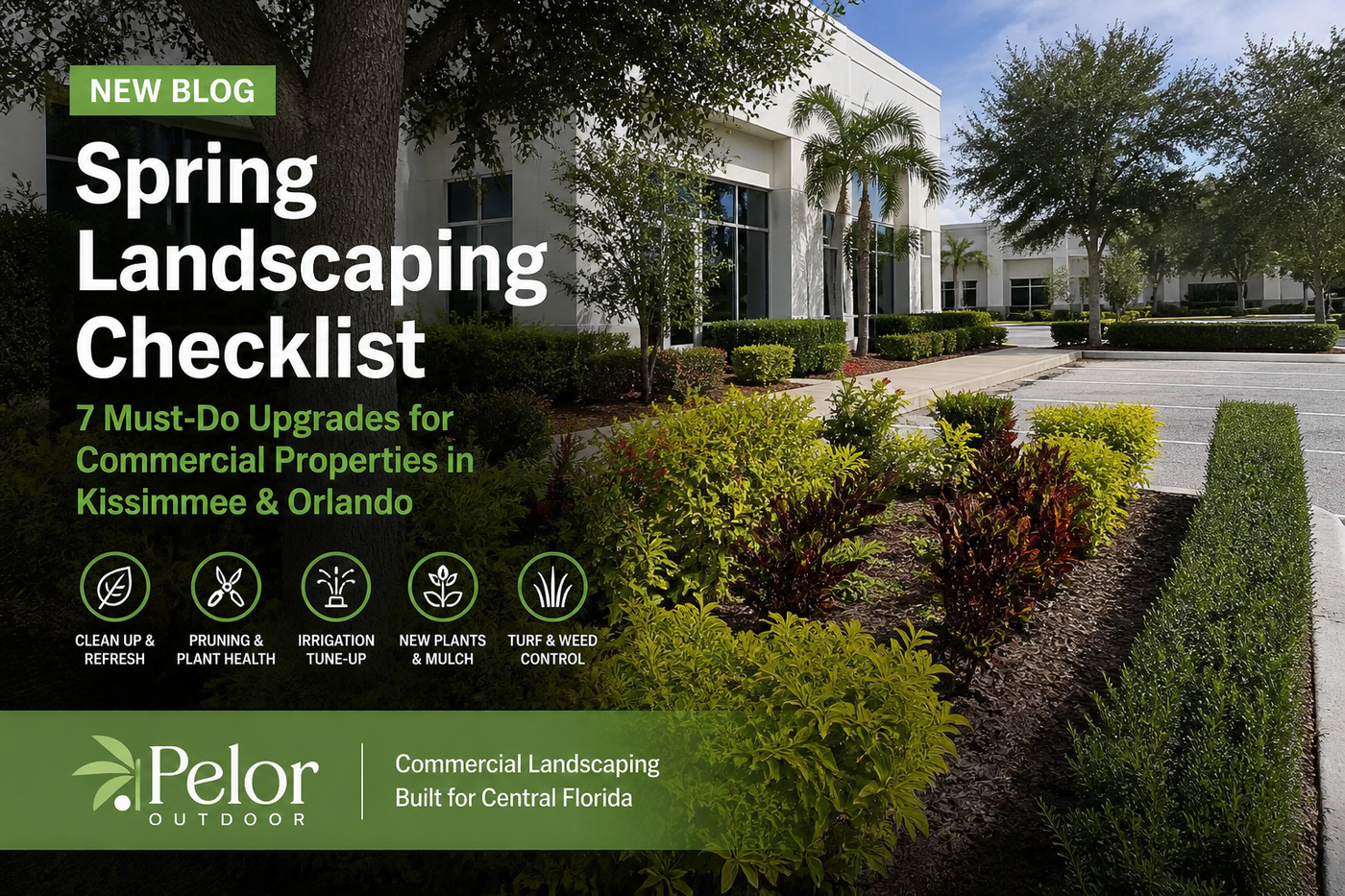
Get your property ready for peak season with a proven spring landscape strategy built for Central Florida conditions.
Key Highlights
- Spring prep directly impacts summer performance and maintenance costs
- Irrigation optimization can reduce water waste by 15–30%
- Early pruning and plant care prevent overgrowth and replacement costs
- Fresh mulch and clean edges instantly improve property appearance
- Proactive weed and pest control reduces reactive service calls
- Strategic plant installs increase long-term landscape value
Why Spring Landscaping Matters in Central Florida
- Warmer weather accelerates growth almost immediately
- Irrigation demand increases fast
- Weed and pest activity spikes
- Storm season begins to impact soil and drainage
Properties that act early consistently outperform those that react later.
Spring in Kissimmee and Orlando is when commercial landscapes either get ahead or fall behind. With rising temperatures, fast plant growth, and increased rainfall on the way, now is the time to lock in curb appeal, control costs, and prevent mid-season issues.
If you manage an HOA, retail center, office park, or multifamily property, this checklist is built to help you stay proactive.
Why Spring Landscaping Matters in Central Florida
- Warmer weather accelerates growth almost immediately
- Irrigation demand increases fast
- Weed and pest activity spikes
- Storm season begins to impact soil and drainage
Properties that act early consistently outperform those that react later.
7-Step Spring Landscaping Checklist for Commercial Properties
1. Property Cleanup & Bed Reset
Create a clean baseline before growth takes off.
What to focus on:
- Remove debris, dead plants, and leaf buildup
- Re-edge all landscape beds for a sharp look
- Install fresh mulch (improves moisture retention + appearance)
2. Pruning & Plant Health
Set structure now to reduce overgrowth later.
Checklist:
- Trim shrubs and hedges for uniform shape
- Remove damaged or diseased branches
- Elevate tree canopies for visibility and clearance
- Inspect for early pest issues
3. Irrigation System Tune-Up
One of the most overlooked cost-saving opportunities.
Checklist:
- Check all zones for full coverage
- Repair leaks, broken heads, and pressure issues
- Adjust timers for spring conditions
- Optimize for new plant installations
Impact: Reduces water waste and prevents plant stress heading into summer.
4. Fertilization & Soil Conditioning
Florida soil needs support to perform.
Checklist:
- Apply slow-release fertilizers
- Add soil amendments where needed
- Reinforce weak turf areas
- Address nutrient deficiencies early
5. New Plant & Tree Installation
Spring is prime time before extreme heat hits.
Best additions for Central Florida:
- Structured shrubs for clean lines
- Native and drought-tolerant plants
- Seasonal color for visual impact
- Shade trees for long-term value
Checklist:
- Install with proper spacing and depth
- Tie all new plants into irrigation
- Design for long-term growth, not just immediate look
6. Weed & Pest Prevention
Control it now or pay for it later.
Checklist:
- Apply pre-emergent weed control
- Spot treat active weeds
- Monitor for insects and fungal issues
- Maintain proper mulch coverage
7. Turf & Maintenance Setup
Prepare for aggressive growth cycles.
Checklist:
- Begin routine mowing schedule
- Edge all hard surfaces
- Patch or overseed thin areas
- Adjust mowing height by grass type
What This Means for Your Property
Commercial properties that complete spring prep typically see:
- Lower summer maintenance costs
- Fewer irrigation and plant replacement issues
- Stronger curb appeal and tenant perception
- More consistent landscape performance year-round
Frequently Asked Questions (FAQ)
When should spring landscaping start in Central Florida? Typically late February through April. Starting early helps prevent rapid overgrowth and irrigation inefficiencies.
How often should irrigation systems be checked? At minimum once per quarter, but spring is the most important seasonal adjustment period.
What plants work best for commercial properties in this area? Drought-tolerant and Florida-friendly plants like viburnum, podocarpus, and ligustrum perform well with less maintenance.
How much mulch should be installed? A consistent 2–3 inch layer is ideal for moisture retention and weed suppression.
Is spring fertilization necessary every year? Yes. Central Florida’s sandy soil lacks nutrients, so annual fertilization is critical for plant and turf health.
Bottom Line
Spring is your opportunity to control costs, improve appearance, and prevent problems before they start. Waiting even 4–6 weeks can lead to avoidable issues that cost significantly more to fix later.
Work With a Local Team That Understands Central Florida
Pelor Outdoor helps commercial properties across Kissimmee, Orlando, and surrounding areas execute high-performance landscape strategies built for Florida conditions.
From full spring cleanups to irrigation optimization and plant installations, we handle it end-to-end. Contact us today for a free assessment.