Learn how to perform a frost scratch test and determine when to replace frost-damaged trees and shrubs in Central Florida. Expert advice from Pelor Outdoor serving Kissimmee, St. Cloud, and Orlando.
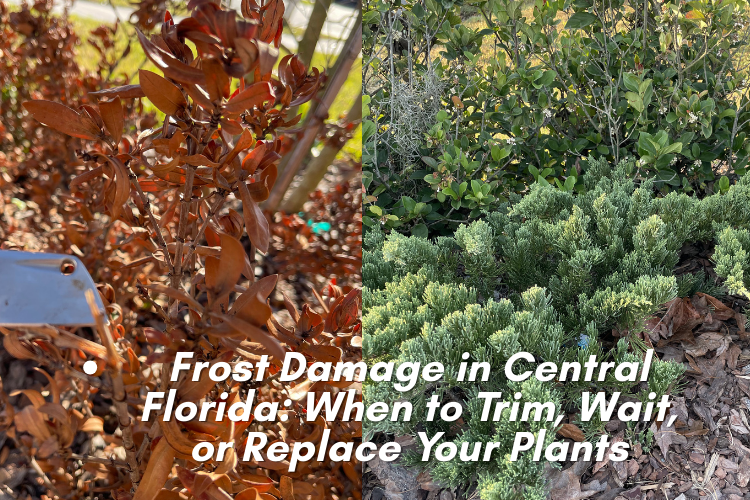
Frost Damage in Central Florida: When to Trim, Wait, or Replace Your Plants
A Practical Guide from Pelor Outdoor’s CEO, Caleb
Central Florida homeowners know that frost is rare. But when it hits, it can cause widespread damage to trees, shrubs, and landscape plants. After a cold snap, many properties in Kissimmee, St. Cloud, and Orlando are left with brown leaves, wilted foliage, and uncertainty.
The big question becomes:
Do I replace these plants now, or wait?
Caleb, CEO of Pelor Outdoor Landscape Solutions, recently addressed this exact issue while inspecting frost-impacted plants on site.
“We’re out here taking a look at some plants and I want to give you a little educational tip on how to check the health of your plants after a cold snap.”
Let’s break down exactly how to evaluate frost damage, when to wait, and when it is time to replace.
Understanding Frost Damage in Central Florida
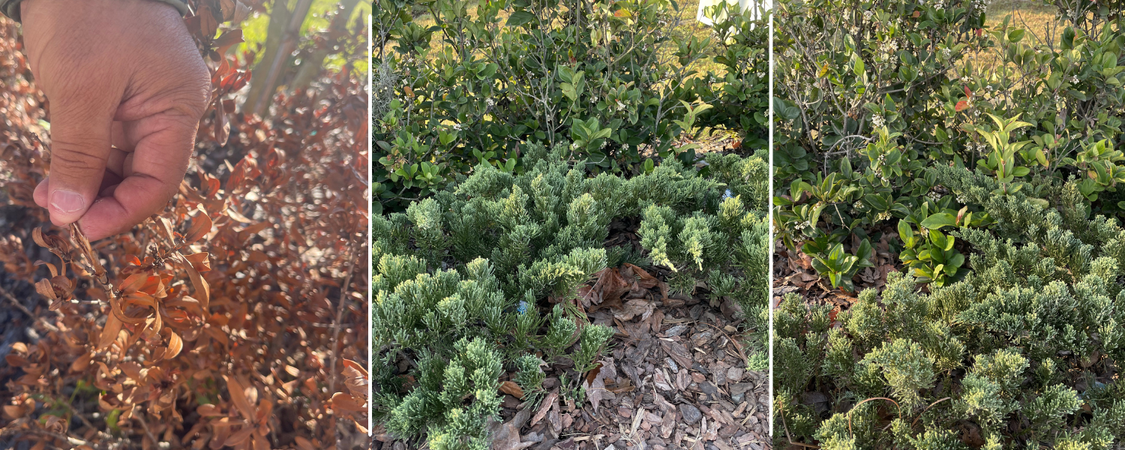
Unlike northern climates, many plants in Central Florida are tropical or subtropical. That means they are not built for prolonged cold exposure.
After a frost event, you may notice:
- Brown or blackened leaves
- Wilted or mushy foliage
- Drooping branches
- Shrubs that look completely dead
But appearance alone does not always tell the full story. Many plants look severely damaged but are still alive beneath the surface.
The Frost Scratch Test: How to Check if Your Plant Is Still Alive
Caleb demonstrated one of the simplest and most effective ways to check plant health after frost.
“We’re going to find some good wood on the plant. We’re going to do a scratch test and you can see there the green health of the plant.”
How to Perform a Scratch Test
-
Choose a small branch or stem.
-
Use your fingernail or a knife to lightly scratch the outer bark.
-
Look at the tissue underneath.
Here is what you are looking for:
-
Green under the bark → The plant is alive.
-
Brown and dry under the bark → That section is dead.
If multiple stems show green tissue, the plant has a strong chance of recovery. If everything scratches brown from top to base, replacement may be necessary.
When to Wait Before Replacing Frost-Damaged Plants
One of the biggest mistakes property owners make is removing plants too soon.
In Central Florida, it is best to wait at least two to four weeks after the last frost before making replacement decisions.
Why?
-
New growth may begin once temperatures stabilize.
-
Roots may still be healthy even if leaves are damaged.
-
Premature pruning can expose living tissue to further cold stress.
Caleb explained this clearly during his inspection:
“This plant here is going to be okay after the recent frost that we’ve had and shouldn’t need replacement.”
Patience often saves thousands of dollars in unnecessary replanting.
Signs Your Trees or Shrubs Will Recover
You likely do not need replacement if you notice:
-
Green tissue during scratch testing
-
New buds forming at branch tips
-
Flexible stems instead of brittle wood
-
Root systems that feel firm and stable
Plants such as podocarpus, viburnum, many palms, and even some tropical ornamentals can rebound surprisingly well.
In many cases, what looks like total loss is simply leaf burn.
Signs It Is Time to Replace Frost-Impacted Plants
Some plants unfortunately do not recover.
Here are strong indicators replacement is the right move:
-
Scratch test reveals brown tissue all the way to the base
-
Entire plant is brittle and dry
-
Mushy trunk or foul odor near the base
-
No new growth after four weeks
-
Visible splitting in bark or structural cracking
Caleb also pointed out:
“Some others not so well, they’re brown and dead.”
If structural integrity is compromised, especially in trees near homes or walkways, removal becomes a safety issue.
Why Timing Matters for HOA and Code Compliance
In Central Florida communities, HOA guidelines and city code enforcement often require properties to maintain landscaping standards.
Dead shrubs and trees can trigger:
-
HOA violation notices
-
Code enforcement warnings
-
Fines for noncompliance
Waiting too long to address confirmed dead plants can cost more than proactive replacement.
A professional assessment ensures you:
-
Avoid unnecessary removal
-
Prevent fines
-
Maintain curb appeal
-
Protect property value
The Economic Side of Frost Damage Decisions
Replacing mature shrubs or trees prematurely can be expensive. On the other hand, leaving truly dead plants in place can:
-
Attract pests
-
Create safety hazards
-
Damage irrigation efficiency
-
Lower property value
A balanced approach based on proper evaluation is key.
At Pelor Outdoor, frost assessments include:
-
Structural evaluation
-
Scratch testing
-
Root stability checks
-
Irrigation review
-
Replacement recommendations only when necessary
Best Practices After a Central Florida Cold Snap
If your landscape experienced frost, follow these steps:
-
Do not immediately prune brown foliage.
-
Perform scratch testing on questionable plants.
-
Wait for consistent warmer temperatures.
-
Remove only clearly dead branches.
-
Check irrigation systems for freeze-related damage.
-
Schedule a professional tree and shrub evaluation if unsure.
This approach protects your investment and avoids unnecessary costs.
Common Frost-Damaged Plants in Central Florida
Some species are more vulnerable than others:
-
Areca palms
-
Foxtail palms
-
Crotons
-
Hibiscus
-
Ixora
-
Ficus
-
Tropical annuals
Cold-tolerant plants that often recover include:
-
Podocarpus
-
Viburnum
-
Indian hawthorn
-
Some native species
Knowing which category your landscape falls into can help guide next steps.
Commercial and HOA Properties: Special Considerations
For commercial landscaping and HOA communities, frost damage has additional impact:
-
Curb appeal affects tenant satisfaction.
-
Dead landscaping can impact property valuation.
-
Large-scale replacement requires planning and logistics.
With Pelor’s upgraded commercial equipment and experienced crews, larger properties can be evaluated and restored efficiently.
Whether it is retail centers, apartment complexes, or HOA common areas, frost damage response must be strategic.
When to Call a Professional
Call for an assessment if:
-
You are unsure how to perform the scratch test.
-
Large trees show structural stress.
-
Multiple shrubs appear fully dead.
-
You received an HOA or insurance notice.
-
You want to prevent future cold damage with proper plant selection.
Professional evaluation often saves both money and stress.
Preventing Future Frost Damage
While Central Florida winters are typically mild, preparation helps:
-
Install frost blankets for sensitive plants.
-
Adjust irrigation before freezes.
-
Choose more cold-tolerant species during replacements.
-
Use proper mulching to insulate root systems.
-
Maintain healthy soil to strengthen plant resilience.
Landscape planning today reduces risk tomorrow.
Final Thoughts from Caleb
The biggest takeaway from Caleb’s field tip is simple:
Do not assume a brown plant is a dead plant.
“Find some good wood on the plant. Do a scratch test. If it’s green, the plant’s going to be okay.”
Before you spend money replacing landscaping, make sure it truly needs to be replaced.
Schedule a Frost Damage Assessment
If your trees or shrubs were impacted by the recent cold snap in Central Florida, Pelor Outdoor Landscape Solutions can help you determine the right next step.
Whether you need pruning, selective replacement, or full landscape restoration, our team is ready.
Call Pelor Outdoor at 407-738-1146
Visit Pelor.com to schedule your assessment
Serving Kissimmee, St. Cloud, Orlando, and surrounding Central Florida communities
Protect your landscape investment and make informed decisions after frost damage.